
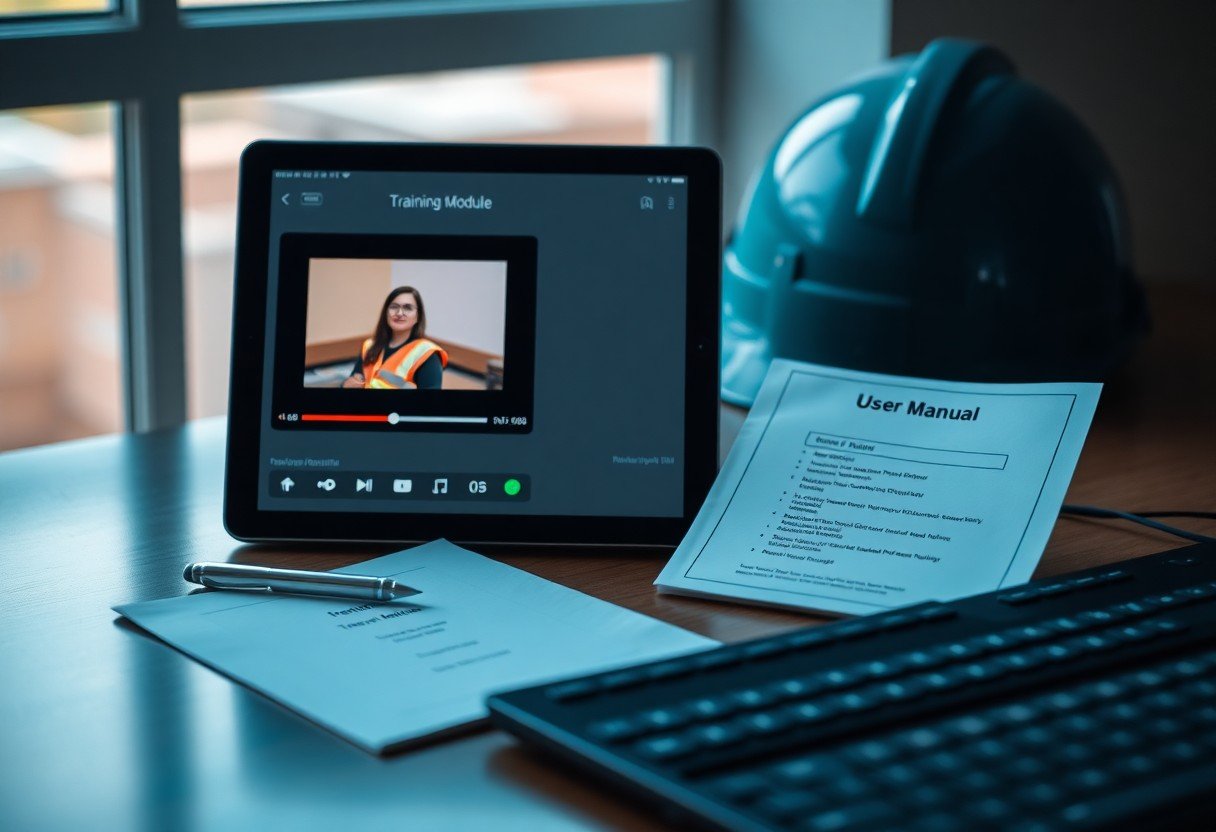
Just imagine updating a training manual for every software change, only to reprint and redistribute hundreds of copies across departments. You no longer have to. Digital training resources now deliver real-time updates, interactive content, and on-demand access, making printed manuals increasingly obsolete in fast-moving workplaces.
Key Takeaways:
- Digital training resources reduce long-term distribution and update costs, as seen when a mid-sized SaaS firm replaced 12,000 printed guides with an interactive online portal, cutting annual material expenses by shifting to cloud-based content delivery.
- Interactive elements such as embedded quizzes, video walkthroughs, and real-time feedback loops increase user engagement and knowledge retention compared to static text and diagrams in printed manuals.
- Organizations can instantly deploy updates across global teams, ensuring compliance and consistency, a shift that became critical during rapid regulatory changes in the healthcare sector last year.
The Heavy Burden of Paper
The physical weight of the past
Each printed manual adds measurable heft to your training materials, stacking into boxes that strain shelves and slow logistics. A single employee onboarding set can exceed five pounds, multiplying across departments into hundreds of physical pounds that must be moved, tracked, and maintained.
The high price of storage space
Storing printed training materials demands dedicated square footage, often in climate-controlled facilities to prevent degradation. That space could otherwise serve active operations or revenue-generating functions, making every shelf of manuals a silent cost center.
Consider a mid-sized SaaS firm maintaining ten years of compliance documentation in print. Over time, those binders occupy an entire storage room, requiring not just space but inventory checks, security, and handling labor. Digital files, by contrast, scale without physical expansion, eliminating the need for offsite warehouses or internal real estate sacrifices.
The Speed of the Digital Pulse
Digital training resources keep pace with real-time changes in technology and workflows. When a software update alters a process, your team needs accurate guidance immediately. Printed manuals become outdated the moment they leave the press, but digital content can reflect changes the same day. This responsiveness ensures your workforce always operates with current information.
Editing with a single keystroke
A typo in a printed manual means reprinting hundreds of pages, but digital files let you correct errors instantly. You update the source once, and every user sees the fix on their next login. A mid-sized SaaS firm revised its onboarding steps weekly during its beta phase, relying on immediate edits to maintain accuracy without waste.
Sending manuals across the sea
Shipping printed manuals to international offices takes days and incurs high freight costs. Digital versions appear in employees’ inboxes the moment they’re published. A support engineer in Jakarta accesses the same updated protocol as a colleague in Denver within seconds of release.
Global teams no longer wait for couriers or manage customs delays. When a compliance update affected operations in three continents, a logistics company pushed revised training materials digitally and confirmed team-wide understanding through embedded quizzes within four hours. Time zone differences no longer slow down knowledge transfer.
The Power of Motion
Static pages can’t replicate the way people learn through movement and sound, which is why digital training resources now prioritize dynamic content. You absorb complex procedures faster when seeing them in action, not deciphering diagrams. Explore the importance of digitizing training manuals to unlock this advantage.
Video replaces the frozen image
Video shows each step unfolding in real time, turning abstract instructions into observable actions. You watch a technician calibrate a sensor, noticing hand placement and timing no static image could convey. A mid-sized SaaS firm reduced onboarding errors by switching installation guides from print to video walkthroughs.
Sound brings the lesson to life
Audio cues guide your attention and reinforce key points through tone and pacing. You hear the correct pronunciation of technical terms and the urgency in a warning, making the message stick more effectively than silent text.
Narrated explanations allow you to process information without shifting focus between text and visuals. You follow along as the instructor emphasizes a safety check, their voice rising slightly before a critical step. This auditory layer mimics real-world coaching, bridging the gap between theory and practice in a way printed manuals cannot replicate.
The Green Path Forward
Digital training resources reduce reliance on physical materials, aligning corporate learning with environmental responsibility. Every shift from print to screen lowers demand for paper, ink, and shipping, decreasing your organization’s ecological footprint over time.
Saving the tall pines
Forests supply the pulp for printed manuals, and a single mid-sized SaaS firm’s annual training materials can consume hundreds of trees. By adopting digital formats, you help preserve mature woodlands that support biodiversity and carbon sequestration.
Cutting the ink budget
Printing large volumes of training content requires substantial ink, a petroleum-based product with high embedded energy. Transitioning to digital eliminates recurring ink expenses, reducing both material waste and long-term operational costs.
One multinational insurer recalculated its annual training spend after moving to online modules and found ink and toner procurement dropped by nearly 70 percent within two years. The savings were redirected into interactive simulations, improving engagement without increasing the learning budget.
The Borderless Classroom
Digital training dissolves geographic barriers, turning isolated teams into unified learners. You can onboard a contractor in Manila or a new hire in Lisbon with the same materials, at the same time, without shipping delays or version mismatches. Training stays consistent, immediate, and universally accessible.
Reaching the distant worker
Remote employees no longer wait weeks for orientation packets to arrive by mail. You deliver onboarding modules the moment access is granted, ensuring field technicians, offsite consultants, and overseas partners begin with current, complete knowledge.
Translating for every man
Workers across language lines receive accurate training in their native tongue. You deploy multilingual subtitles, voiceovers, and localized text within the same digital platform, eliminating confusion and reducing errors in high-risk tasks.
Translation no longer means reprinting hundreds of manuals for each region. You update a single training video with selectable subtitles in Spanish, Mandarin, or Arabic, ensuring compliance and clarity across global teams. A mid-sized SaaS firm reduced retraining incidents by switching to localized digital modules, proving language alignment strengthens operational precision.
The Truth in Data
Digital training platforms reveal patterns invisible in printed manuals. You gain access to real-time insights on completion rates, quiz performance, and time spent per module. A mid-sized SaaS firm noticed 70% of new hires skipped printed onboarding steps, while digital tracking showed exactly where confusion arose. These metrics shift decisions from assumptions to evidence.
Seeing who learns fast
Some employees finish modules in half the average time without sacrificing accuracy. You identify these high performers early, allowing you to assign mentorship roles or fast-track certifications. One logistics company used this data to promote three warehouse supervisors within six months.
Finding where they fail
Drop-off spikes at specific quiz questions signal knowledge gaps. You see which concepts trip up 40% of users, prompting immediate content review. A healthcare provider discovered staff consistently missed medication protocol steps, leading to a revised training sequence.
When repeated errors cluster in a single interactive simulation, you can isolate whether the issue lies in content clarity, interface design, or prior knowledge. Adjusting a single video prompt in a compliance module reduced failure rates by half within two weeks. These precise interventions are impossible with static paper materials.
To wrap up
You access up-to-date training materials instantly, whether onboarding remotely or troubleshooting in real time. Printed manuals become outdated with the first software update, while digital resources evolve alongside your tools. A mid-sized SaaS firm reduced internal support queries by shifting to interactive modules that guide users step by step. You retain knowledge more effectively when learning reflects actual workflows, not static pages.